Human agency
We use technology to restore clinical judgment and patient agency. In a landscape of digital noise, we help patients reconnect with their own feedback loops and stay consistent, active participants in their own health.
Our point of view
Medicine is splitting into two models. One prescribes the pill and ends there. The other treats the whole picture, and needs a place for that care to happen after the patient leaves the room.
The paradox
Clinical programs for longevity, metabolic, and hormonal health have never been more precise, and the data behind them never richer. Yet the more sophisticated the science becomes, the wider the gap grows between what a clinician designs and what actually happens in a patient's life.
That gap has two sides. For the patient, it is the distance between a medical plan and the friction of daily life. For the clinician, it is the manual, costly work of guiding a patient they cannot see between visits.
This is not a knowledge problem. It is an orchestration problem.
Our system is built for reactive, acute care. For preventive and chronic, lifestyle-heavy programs, the days between visits are a black box. The patient leaves the consultation and meets decision fatigue, daily life, and digital noise. The clinician is left with retrospective self-reporting and unstructured data dumps. The days between visits are where outcomes are lost.
What we believe
We use technology to restore clinical judgment and patient agency. In a landscape of digital noise, we help patients reconnect with their own feedback loops and stay consistent, active participants in their own health.
A protocol is fixed. A life is not. For a plan to survive contact with the real world, it has to respect the patient's physiology and circumstances day to day. We read daily signals and adapt how the plan is delivered to fit the patient's reality, without changing the clinical intent. The clinician gets a high-fidelity view of that reality without chasing data.
Self-care has become a vague word that offloads the burden of choice onto the patient. We replace that ambiguity with structure. By translating the reasoning behind a clinician's plan into a daily rhythm, we turn a recommendation into a habit the patient can keep. The same structure serves the clinician, reinforcing the plan so they can deliver high-touch care at scale.
“The future of care is what happens between visits. We're building the platform that makes prevention and lifestyle-led care a scalable reality.”
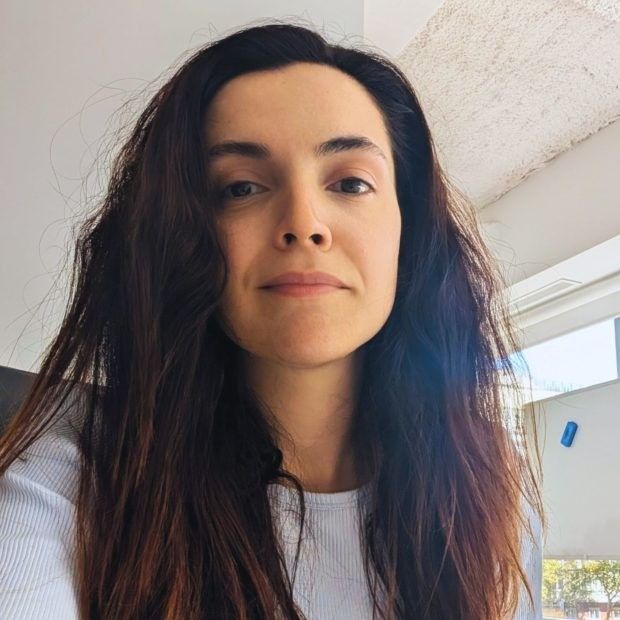
Virginia Diego, Founder

Founder
Before Plimr, Virginia spent her career on complex systems. Strategy consulting at McKinsey across health and pharma. Building behavioral and compliance infrastructure as a fintech operator. Leading product at Cobee from its Series A through its acquisition by Pluxee.
She lives the problem she is building for, and pairs that with the operational rigor of scaling complex systems in health, benefits, and regulated markets. That combination is why Plimr exists.
Previously

The platform today
Clinicians build a protocol once and deploy it across patients. Patients follow a structured daily plan calibrated to their life. Behavior, wearables, and labs flow into one longitudinal clinician view, ready before every visit, with new device integrations rolling out continuously.
Get in touch
If your programs depend on what patients do between visits, let's talk. We'll show you the platform and how it fits your practice.
Book a demo